
12 minutes
Introduction
When the New Strategic Arms Reduction Treaty (New START) expired on February 5, 2026, the United States and Russia were left without any legally binding restrictions on their nuclear forces. The United States and Soviet Union had opened the era of arms control in the 1960s and eventually negotiated several agreements that restrained their competition and reduced their forces. This process was one of the more visible elements of the post-1945 nuclear order that sought to mitigate the risks created by the existence of nuclear weapons.
The nuclear order includes two systems that address the risk of nuclear war: a system of deterrence and restraint that seeks to reduce the risk of nuclear use in a conflict between nuclear weapons states, and a system of nonproliferation that seeks to impede the acquisition of nuclear weapons by additional nations.[1] Each of these systems has contributed to efforts to reduce nuclear dangers; both are showing signs of strain in the current security environment. The absence of any negotiations towards a future arms control agreement has amplified concerns about the erosion of that order and the fading relevance of the norms that support it.
I focus specifically on the arrangements that seek to reduce the risk of nuclear use among nuclear weapons states. These include not only formal treaties like those adopted during the arms control era, but also informal and implicit norms that set the boundaries of nuclear competition. The challenge in an era without arms control is to amplify the potential role of norms in managing competition when nations have seemingly increased their reliance on nuclear weapons. The nuclear weapons states can begin this process by reissuing past statements that recognize the dangers of unrestrained nuclear competition and by reaffirming their commitment to cooperate in reducing nuclear risks.
Norms, Arms Control, and the Nuclear Order
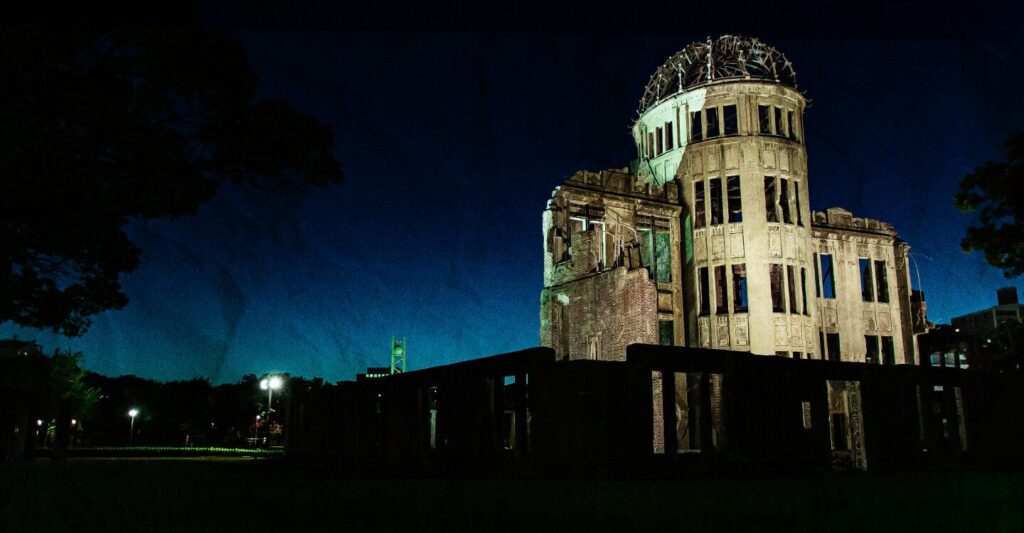
The nuclear attacks on Hiroshima and Nagasaki in August 1945 revealed horrific levels of physical, psychological, and humanitarian destruction. Evidence of this devastation inspired many to advocate for either international control over atomic weapons or their outright elimination. Nevertheless, as the 1950s unfolded, the United States and Soviet Union continued to develop nuclear arsenals that would eventually total tens of thousands of warheads on each side.
A path to cooperation began to open in the 1960s, after the Cuban Missile Crisis underscored the acute risks of unrestrained nuclear competition. During his 1963 commencement address at American University, President John F. Kennedy argued that total war “makes no sense in an age when a single nuclear weapon contains almost ten times the explosive force delivered by all the allied air forces in the Second World War.” He suggested that the United States and Soviet Union focus on a practical approach to peace based on “a series of concrete actions and effective agreements which are in the interest of all concerned.”[2]
Arms Control
The nuclear weapons states began to identify “concrete actions and effective agreements” in 1963. In June the United States and Soviet Union agreed to set up a direct, secure communications system between the two nations. This Hot Line would allow “quick and reliable communication directly between the heads of government” and would, therefore, help “reduce the danger that accident, miscalculation, or surprise attack might trigger a nuclear war.”[3] In August, the United States, Soviet Union, and United Kingdom agreed to ban nuclear explosions in the atmosphere, outer space, and underwater.[4] They did not ban underground nuclear weapons tests, so this Limited Test Ban Treaty did little to slow the growth of nuclear arsenals. It did, however, respond to growing concerns around the world about the detrimental effects of radioactive fallout from nuclear tests.[5]
By the end of the 1960s, the United States and Soviet Union had begun to negotiate agreements to directly address their nuclear weapons programs. Those signed in the 1970s began to restrain the nuclear competition and dampen arms race pressures by limiting the numbers of launchers for offensive ballistic missiles and restraining the deployments of ballistic missile defenses. The agreements did not, however, reduce or restrain the numbers of deployed nuclear warheads. In contrast, the agreements signed in the 1980s and after the end of the Cold War did require significant reductions in the numbers of deployed weapons. This change coincided with improvements in the US-Soviet and US-Russian relationships. The nations decided that they could meet their national security requirements with fewer nuclear weapons; they codified these lower numbers in the limits in their treaties.
Norms
The norms of the nuclear order developed during the 1950s and 1960s, when atmospheric nuclear tests combined with memories of Hiroshima to remind political leaders and civilian populations that nuclear weapons were different from other military capabilities. Many scientists, policy experts and political leaders feared that nuclear war could not be controlled and recognized that any nuclear war created the potential for catastrophic consequences. Over time, the idea that nuclear weapons should be reserved for only the most extreme circumstances grew into a norm of non-use, a norm that rested on the fundamental calculation that the costs of a nuclear conflict would far outweigh any national security benefits a state could achieve by initiating a war with nuclear weapons.
Thus, the United States and Soviet Union eventually recognized that their mutual vulnerability to nuclear attack provided “a prudential rationale for not using nuclear weapons against an opponent who also has a nuclear arsenal.”[6] This idea is the core of the norm of deterrence. Most nuclear weapons states have shared the view, at least since the 1960s, that “the overwhelming destructive power of nuclear weapons meant such weapons were useful for retaliatory deterrence only, not for coercive threats or actual nuclear warfighting purposes.”[7]
Disorder in the Nuclear Order
The collapse of the nuclear arms control process began long before New START expired in 2026. Russia had suspended its participation in the treaty’s mandated data exchanges and notifications in 2023 and refused to engage in discussions on a future treaty or risk reductions measures in the years after its 2022 invasion of Ukraine. Early signs were also evident in 2019, when the United States detected evidence of China’s buildup of nuclear warheads and missile silos, and 2020, when China refused to join existing arms control talks or even discuss its nuclear plans and programs with the United States. Warnings also appeared in 2018 when President Vladimir Putin revealed Russia’s plans to deploy new types of nuclear delivery systems that would not count under the limits in New START and even earlier in the decade when Russia apparently tested a cruise missile with a range banned by the INF Treaty.
In the United States, the Trump administration began to advocate for new types of nuclear weapons in its 2018 Nuclear Posture Review, withdrew the United States from the INF Treaty in 2019, and rejected calls to extend New START in 2020. The Biden administration initially extended New START, but had concluded by 2024 that the United States might need to expand its nuclear forces.
The norm of deterrence has also faced recent challenges because nuclear weapons have evolved into tools of coercion that seek to limit the options and operations of other states even if they, too, are armed with nuclear weapons. Russia used this strategy during the early months of the war in Ukraine, when it referenced its nuclear forces in statements intended to convince the United States and NATO to limit their support to for Ukraine. China’s growing nuclear force posture could also become a tool of coercion if China seeks to limit US engagement in the Western Pacific. Moreover, either of these nations could challenge the norm of non-use if they believed nuclear use could advance their goals in a regional conflict. In the United States, several experts have concluded that the United States might need to use nuclear weapons in response to a conventional attack by China against Taiwan.
Coercive nuclear threats against nuclear-armed adversaries and plans for nuclear use during regional conventional conflicts are inconsistent with the norms that have helped reduce the risk of nuclear war for decades. The nuclear weapons states have begun to reject restraint in their nuclear plans, programs, and operations and accept the fact that any crisis or conflict could escalate to nuclear war. The challenge, then, is to identify a role for norms in managing nuclear competition and reducing the risk of war in an era when nations have seemingly increased their reliance on nuclear weapons and have expanded their thinking to view nuclear weapons as coercive tools of statecraft.
Rebuilding the Nuclear Order
Efforts to rebuild the nuclear order will not rely on a return to the long-standing US-Russian arms control process. The United States and Russia have been unable to agree on an agenda for a future treaty and the United States rejected Russia’s suggestion that the two nations remain within the limits in New START. China has refused to participate in any negotiations that would restrain its nuclear forces. Moreover, officials in both the Biden and Trump administrations believe the United States needs to deploy more nuclear weapons to meet simultaneous challenges from Russia and China.
Efforts to rebuild the nuclear order also cannot rely on pressure from the international community or civil society. Voices from outside the nuclear weapons states have always influenced discussions about nuclear dangers and suggested steps that might reduce the risk of nuclear war. But they cannot convince the nuclear weapons states to restrain their nuclear programs when each of these states believes that nuclear weapons remain at the center of their national security strategies.
As a result, efforts to rebuild the nuclear order must come from engagements and agreements between and among the nuclear weapons states. They must recover their understanding of the risks created by unrestrained competition and recognize the dangers created by coercive nuclear threats and operational plans that anticipate the use of nuclear weapons in less than extreme circumstances.
Restoring Norms
During the Cold War, the United States and Soviet Union signed several joint statements that acknowledged the dangers of nuclear use and their responsibility for taking steps to reduce the risk of nuclear war. The 1971 Accident Measures agreement highlighted “the devastating consequences that nuclear war would have for all mankind.”[8] In the 1973 Agreement on the Prevention of Nuclear War, the two nations agreed “that an objective of their policies is to remove the danger of nuclear war and of the use of nuclear weapons.”[9] In 1985 Presidents Ronald Reagan and Mikhail Gorbachev reaffirmed these sentiments when they stated that “a nuclear war cannot be won and must never be fought.”[10]
When issuing these statements, each nation recognized that both nations would suffer if either initiated a nuclear war. This is the reality that gave rise to the norms of non-use and deterrence. Restoring the recognition of this reality, particularly among leaders from the nuclear weapons states, is central to any effort to restore these norms and rebuild the nuclear order.
To begin this process, the United States, Russia, China, France, and the United Kingdom should highlight the dangers of coercive nuclear threats and highlight their concerns about the dangers of nuclear war. Political leaders from these countries should also reaffirm their commitments to the norms of non-use and deterrence with statements similar to those issued during the Cold War. They took a step in this direction in 2022, when they reissued the Reagan-Gorbachev statement, but this was prior to Russia’s invasion of Ukraine, the expiration of New START, and the growing use of nuclear threats as a coercive tool.
These types of statements would do little to restrain the nuclear competition but could offer a low-cost, high-impact avenue for restoring cooperation in an era of renewed great-power rivalry. Agreement on even the most basic statements regarding nuclear dangers can also set a baseline for more comprehensive negotiations in the future.
Managing Risks
Over the years, the United States and Soviet Union, and Russian Federation have adopted a range of mechanisms to improve communication, increase transparency, and avoid misunderstandings that could lead to crises, conflicts, and the potential use of nuclear weapons. These include communications channels like the Hot Line Agreement mentioned above, notifications of major military exercises and test launches of ballistic missiles, and restraints on dangerous military operations that could lead to accidents or misunderstandings. These types of measures reduce the risk of accidents or misunderstandings that could lead to nuclear war.
While many of these mechanisms remain in place, they may have little effect on the risks created by coercive threats or active plans for nuclear use in regional conflicts. They also do not address dangers created by new and emerging technologies. Moreover, China has rejected most efforts to address the sources of risks or solutions that will mitigate the dangers.
As a result, the United States, Russia, and China should re-imagine and rebuild the risk reduction process with expert working groups focused on shared concerns about nuclear risks. If the major nuclear powers can agree on the sources of risk, they can then seek to craft concrete measures to mitigate those risks. This should be a collaborative process, with each nation respecting the views of others and all nations agreeing that their central goal should remain the prevention of nuclear war.
Conclusion
For more than 60 years, nuclear weapons states have recognized the dangers created by nuclear weapons and the benefits of cooperation to reduce the risk of nuclear war. This recognition has faded as nuclear weapons states plan for the use of these weapons in regional conflicts and try to shape their security environments with coercive threats. It is incumbent on all of us to remember how devastating nuclear war would be and to take steps to rebuild the nuclear order and recover the norms that support it.