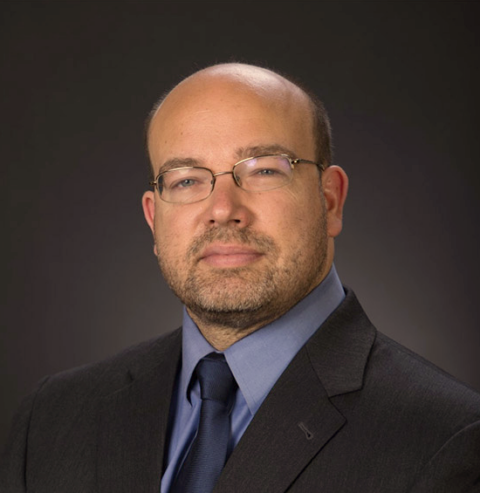
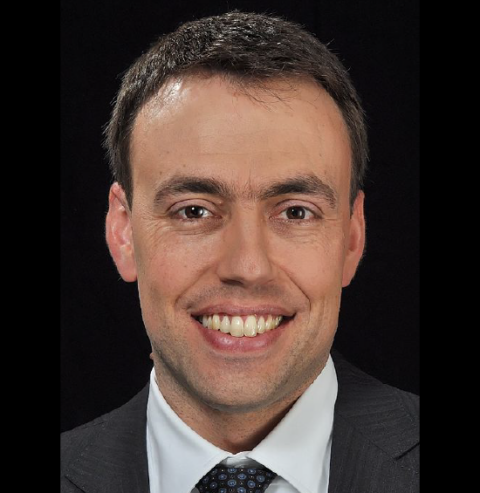
Nikolas Gvosdev in conversation with Nils Schmid.
This interview was originally published in Vol. 66, Issue 1 in Winter 2021.
9 minutes
Nils Schmid, Ph.D., is the Foreign Policy spokesman for the Social Democratic Party (SPD), and is a member of the Bundestag, representing the constituency of Nürtingen in Baden-Württemberg. He joins Orbis editor Nikolas K. Gvosdev in conversation on the future of Germany.
Nikolas K. Gvosdev: To what extent is there going to be continuity in Germany’s foreign relations after the 2021 elections, especially since this is the end of the “Merkel era”?
Nils Schmid: Broadly speaking, you should expect continuity rather than deep changes. I think that Chancellor Angela Merkel embodied the broad European, trans-Atlantic orientation of German foreign policy that is more, or less, shared across the political spectrum. Probably the most important change will take place in our relationship with the People’s Republic of China. That change has something to do with path dependency; meaning, that after more than ten years of tenure, Merkel was very reluctant to change course on China—pursuing engagement through closer trade and economic relations—even after the circumstances of China’s politics and the broad tendencies of China’s politics had changed dramatically. So, I would expect the most visible change, which has begun already to some extent on the European Union level, but also in German foreign policy circles, regarding our relationship with the Indo-Pacific region overall.
Gvosdev: Is the rise of China an existential challenge to Europe and its institutions?
Schmid: I prefer viewing the question of China in terms of a challenge to Germany and Europe as a whole. In strictly military terms, for European security, China’s modernization of military forces does not really pose a direct threat. But China’s rise poses a broad and unparalleled challenge to Europe, to democratic systems of government throughout the world. This is the case, because—contrary to the Soviet bloc—it is not only challenging the world order in terms of military and diplomacy, but it also has been successful in building a strong economy, modernizing that economy, and in developing new technologies. This was not really the case with the Soviet Union, at least since the 1960s. Yes, we had Sputnik, but the Sputnik moment passed really quickly. So, we need to take into account the different dimensions of the China challenge—and this is why I still prefer the term challenge. It is also pertinent because not only is this about China, but about us—the capacity of democracies and socially oriented market economies to generate growth and equality, equal opportunities, and social cohesion. So, I think this aspect is often overlooked when we only look at hard security.
Gvosdev: Your last point—that the challenge is for democratic, socially oriented market economies to be able to show results against China’s model—connects to a broader question. Can a way be found to pursue meaningful results in meeting climate change and environmental goals, without damaging the competitiveness of the German and European economies?
Schmid: I’m convinced that it is not only possible but necessary to transform our industrial system into a sustainable industrial society. The challenge for highly developed industrial societies is to transform a model of production and manufacturing that has worked for more than 200 years now into a sustainable form of production and manufacturing within, let’s say, 25 years. I think we can manage it, under one condition, to conceive of it as a second industrial revolution, in a very broad sense. It is not just because another new technology, such as information technology or the combustion engine, comes around the corner, but the whole industrial system needs to be made independent of fossil fuels. This is a huge industrial transformation. It is not about reneging on levels of consumption and on levels of comfort in day-to-day life. It is about transforming our way of transportation, our way of producing energy, of agriculture, of housing and living, in a very fundamental manner. I think if we coin it in these terms, we can succeed. If we tell our people that it is about deprivation and suffering—driving less cars, having smaller houses, just about reducing consumption—we will not succeed. And in terms of creating jobs and stimulating growth, it will only work if we create new opportunities. I think renewable energy, sustainable transportation modes, the hydrogen economy— all can provide us with huge job opportunities. And it is also very clear to me that this change cannot be reached through market forces alone. We need the state to create the right framework and to give the impetus to help new technologies to enter the market.
Gvosdev: It seems we need a new Sputnik moment—when governments provided the impetus and the spark for development of new technologies in the 1960s and 1970s. They, in turn, have transformed how we live today. Do you see this agenda—renewable energy and so on—as a basis for re-envisioning the trans-Atlantic relationship?
Schmid: Certainly, it is a great opportunity for an update of our trans-Atlantic ties. For too long we have focused on traditional trade and manufacturing issues, and unfortunately, we still have the steel and aluminum dispute unresolved. For too long we debated along very classical free trade lines, about car exports, manufacturing, chemical products, pharmaceuticals, and so on. Yes, these remain issues of importance, but I think the digital age, question of regulating internet firms, of providing data privacy, the question of new technologies like 5G, artificial intelligence (AI), and overall sustainability in our economies—these are new venues for cooperation. We should also not ignore how fighting pandemics and developing new medicines can also help redefine the Atlantic alliance. And that is why I really welcome the creation of the U.S.- EU Trade and Technology Council, which held its first inaugural meeting this past September in Pittsburgh—in Pennsylvania! I think we should take advantage of these developments to give a new dimension to the trans-Atlantic relationship.
Gvosdev: You had mentioned the hydrogen economy, which leads us to the question of energy, which brings up the question of Russia. Germany has traditionally pursued a dual-track approach to Russia—seeking to deter negative Russian actions while holding open the prospect of dialogue and engagement. Is this still a sustainable approach, to reengage with Russia in a European context, or is it time to write Russia off?
Schmid: I think any German government, a new coalition government included, will stick to this double-track strategy. This is the case because historic, cultural, economic ties, and the sheer geographical vicinity of Russia, not to Germany alone but to Europe, prevents us from just writing Russia off. Now the question is to what extent will we see progress on substantive issues, such as Ukraine, or hard security issues as long as Vladimir Putin is in power. There is reasonable doubt about that. But there will be a Russian government after Putin. And there is still a need to manage some of these issues, not only in Europe, but also in Libya, Syria, and in other places, like it or not. So, the German government always tried to engage somehow with Russia, but frankly speaking, we have been troubled by what we have experienced since the invasion of Crimea and the Donbas, and especially over the last four years, during the term of the last German Bundestag. Relations went sour with the poisoning of Alexei Navalny, murder cases here in Germany, and in other parts of the European Union, hybrid warfare, attacks on internet security . . . so, we do not entertain any illusions about what the character of the Putin government is or what the limits of engagement are. The idea of advocating economic liberalization in order to provoke or spark a certain degree of political or societal liberalization does not bring us far because Putin prioritizes stability of power over economic performance and over improvements in the Russian economy.
Gvosdev: You spoke about how relations with Russia soured over the last four years. There were also issues in the U.S.-German bilateral relationship during this time. During the Trump administration, difficulties in the German-American relationship were attributed to the personality of the President. As some of these tensions have persisted in the Biden administration, are there deeper or structural issues at play in the trans-Atlantic relationship?
Schmid: I think there was a very personal dimension to U.S. policy towards Germany under President Trump for which Germany cannot take too much responsibility!
However, I would point out that most of the trouble spots still existing in the trans-Atlantic relationship are not specifically tied to Germany. There are leftovers of classical trade conflicts which we have been used to for decades, be it on energy, on the airplane industry or on steel—there is nothing new under the sun. This has to be dealt with. Most of the newer tendencies in U.S. foreign policy are also not specifically about Germany. What we would call some stumbling blocks—for instance, the tendency in U.S. politics especially in Congress to refrain from large free trade initiatives—this is not only important or relevant regarding Europe, but also regarding the political offers any U.S. government can bring into the Indo-Pacific. It also restricts Western possibilities in terms of economic cooperation—or maybe forces the EU to take on this role to a certain extent. The relative withdrawal of U.S. power from traditional theaters like the Middle East, the post-Soviet space, and, to a certain extent, Africa, is not specific to the German-American bilateral relationship. However, it puts new challenges in front of the EU in terms of diplomacy but also of economic cooperation, and sometime in terms of military action to be taken. I think these are the more important divergencies between Europe and the United States that will really shape the future of our trans-Atlantic relationship.
On U.S.-German relations specifically, the Nord Stream II issue is about to play itself out. We now have a U.S.-German playbook; we have a common declaration and common framework addressing under what conditions the line will operate, as well as pledged support for Ukraine for developing its renewable and hydrogen energy sectors.
Regarding NATO, the two percent issue is about burden sharing and will remain in place. However, after 2024, NATO will need to shift focus in terms of developing more specific objectives and capabilities, rather than applying a broad criterion about spending two percent of gross domestic product (GDP) on defense.