

Image Credit
19 minutes
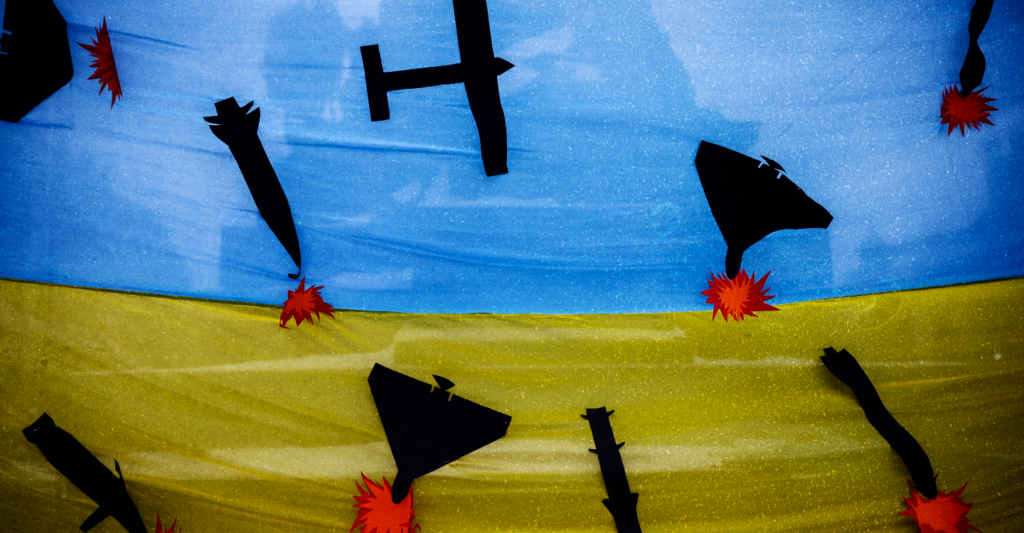
Militaries have long applied the language and mechanics of video games to the modern battlefield. But the so-called “gamification of war” has accelerated as a result of the war in Ukraine, where soldiers earn points for verified kills and civilians crowdfund strikes and watch confirmation footage on Telegram. Whether this development is a moral catastrophe or a rational adaptation that enhances military performance will depend on how these tools are used. Three cases are instructional for understanding how gaming might shape the future of warfare.
In June 2025, a milestone was reached in the annals of warfare: the first recorded case of a position captured entirely by drones and UGVs (unmanned ground vehicles). [1] No Ukrainian infantry units were on the ground when Russian troops surrendered to the Ukrainian Army’s 3rd Assault Brigade.
The observation that drone and robotic technologies have revolutionized modern warfare has by now become almost a cliché. But the gamification of war—that is, the use and integration of features commonly found in video games, such as reward structures and point systems—will have consequences that extend far beyond the battlefield. Entire societies are structured around shared notions of sacrifice, service, honor, and heroism. These values emblazon our military monuments and give meaning to “wearing the uniform.” Gamifying war will not just mean soldiers surrendering to autonomous machines—it will reflect back on the societies engaged in the management of violence.
We may be in uncharted territory but a few recent cases are illustrative of the range of possibilities: the United States, whose drone program has industrialized remote killing; Ukraine, whose Army of Drones initiative has harnessed civic energy in the service of national survival; and Russia, whose Rubicon system has coupled financial incentives to targeting in ways that corrode rather than reinforce military discipline. Each model represents a distinct type of gamification. Each carries distinct consequences for the states and societies that have adopted it. This shift will reshape popular notions of heroism and shared sacrifice, challenge norms around the treatment of noncombatants, and transform the very edifice of civil-military relations.
War has always required its practitioners to overcome the most fundamental human inhibition: the reluctance to kill. Every military institution in history has devised techniques to lower that inhibition, from drill and dehumanization strategies, to the inculcation of ideology and even intoxicants. What’s new this time around is that the techniques of the commercial gaming industry, honed over decades to maximize engagement and produce a drumbeat of dopamine hits, have been conscripted into this ancient project. The most noted examples include tactical first-person shooter games like Arma 3 or the Call of Duty series.
“Gamification, broadly understood, is the application of game-design mechanics—think here of points, leaderboards, badges, rewards, or narrative progression—to activities that are not, in origin, games.”
Gamification, broadly understood, is the application of game-design mechanics—think here of points, leaderboards, badges, rewards, or narrative progression—to activities that are not, in origin, games. In the corporate world it has been used to boost employee productivity and customer loyalty. In the military, it is employed to motivate soldiers, improve logistics, and reduce the psychological friction of lethal action at a distance. The trend is neither new nor, in itself, morally dispositive. The question that matters for policymakers and strategists is not whether or why war has been gamified, but how it will shape outcomes and the deployment of violence.
The American Way of Gamified War
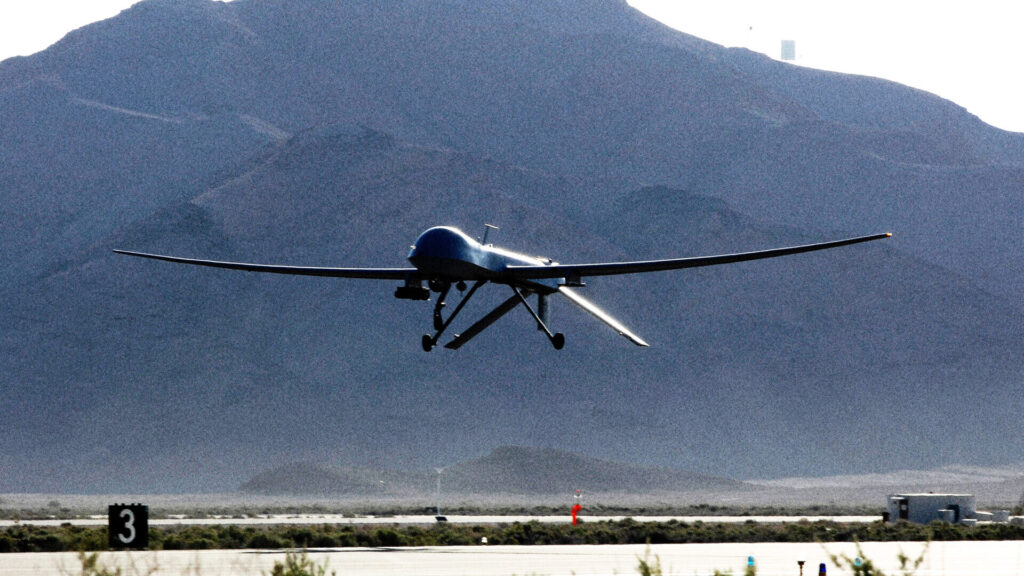
The United States arrived at gamified warfare largely as a byproduct of its technological ambitions. The Predator and Reaper drone programs were originally designed to reduce risk to American servicemembers and to enable persistent surveillance over adversary territory, from the Balkans to Iraq. They succeeded on both counts. They also, over time, produced something their designers had not anticipated: a warrior class whose relationship to lethal activity was mediated almost entirely by screens. Operators are almost never seriously at risk nor directly targeted by their opponents.
What some critics call a “PlayStation mentality” captures something real about the phenomenology of remote warfare.[2] Originating in the mid-2000s during the global war on terror and subsequent rise of autonomous drones, the phrase refers broadly to the desensitization toward violence and detachment some drone pilots reportedly felt conducting warfare over a screen and at a distance.
From an climate-controlled command center in Nevada or New Mexico, the job of an operator was to manipulate a joystick, watch a grayscale image of a moving vehicle or another target, and then press a button. The explosion almost instantly appears on screen. After their shift ends, the operator drives home. The psychological and moral effects of this kind of experience map onto those of a first-person shooter game more than the experiences of traditional warfighters engaged in armed combat.
That helps explain why researchers have consistently found drone pilots to have elevated levels of emotional burnout, driven less by operational tempo than by the psychological demands of monitoring your enemy round the clock for months on end. Adding to the stress is the disconnect between their role as a warfighter and the humdrum of daily life back home. As one researcher noted, “The surreal contrast between killing abroad and domestic normalcy intensifies the psychic toll.”
“When gamified, war becomes something of a management problem, conducted by specialists, overseen by military lawyers, yet invisible to the average citizen.”
The consequences for civil-military relations are also substantial. The drone program has arguably deepened the divide between the profession of arms and civilians. Remote warfare makes a draft—and therefore greater shared sacrifice—less likely, generates few battlefield casualties that make the nightly news, and produces no homecoming ceremonies or ticker-tape parades that connect the experience of war to local communities. Sacrifice—which has historically anchored public support for military action and provided the ethical and moral foundation for the laws of war—is effectively removed from the equation. The same could be said for heroism. When gamified, war becomes something of a management problem, conducted by specialists, overseen by military lawyers, yet invisible to the average citizen. Put otherwise, it turns warfighting into a kind of nine-to-five job where an employee clocks off after their shift. Perhaps more troubling, it also changes who and under what conditions someone is deemed a combatant.
To be sure, there is tactical utility gamifying war in this way. The drone program has degraded terrorist organizations, eliminated high-value targets, and done so at a fraction of the human and financial cost of traditional conventional operations. But the moral and institutional costs are real. Studies of drone operators have documented elevated rates of “moral injury”—a psychological wound distinct from post-traumatic stress disorder, arising less from fear than from the sense of having participated in wrongdoing. The dissociation that makes the killing easier also makes its ethical weight harder to process. Gamifying war can also be used for propaganda purposes. A case in point was the White House’s March 2026 release of video of strikes on Iran edited with Call of Duty-style effects, blurring the line between fiction and nonfiction. [3]
Ukraine’s Version of “Virtual Heroism”
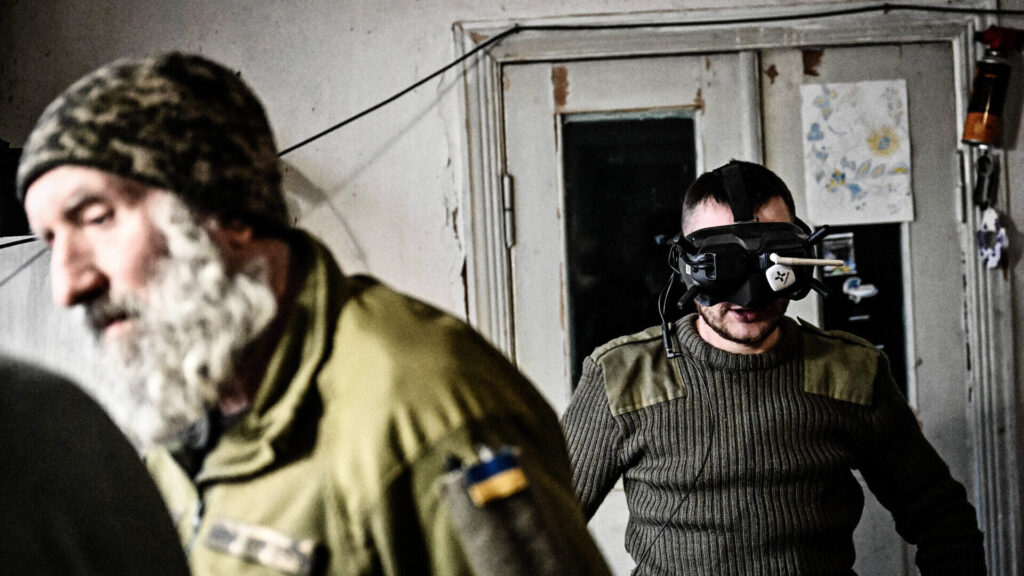
Ukraine’s Army of Drones Bonus program, launched in August 2024 by the Ministry of Digital Transformation, represents a fundamentally different approach to the same basic technology. The system allows Ukraine’s Ministry of Defense to reward points to units that kill or incapacitate Russian enemies and their equipment, which are then “redeemed” on a government marketplace called Brave1 (the “Amazon of Weapons”) to purchase more weapons. For example, destroying a Russian tank earns 40 points, while capturing an enemy soldier yields 120 points—a deliberate incentive structure that prioritizes taking prisoners over taking lives. Where the American model separates the operator from the political community that authorizes the war, the Ukrainian model consciously integrates them. Where the American model produces dissociation, the Ukrainian model has sought to produce what some observers call “virtual heroism”: morally engaged agency exercised through digital means.
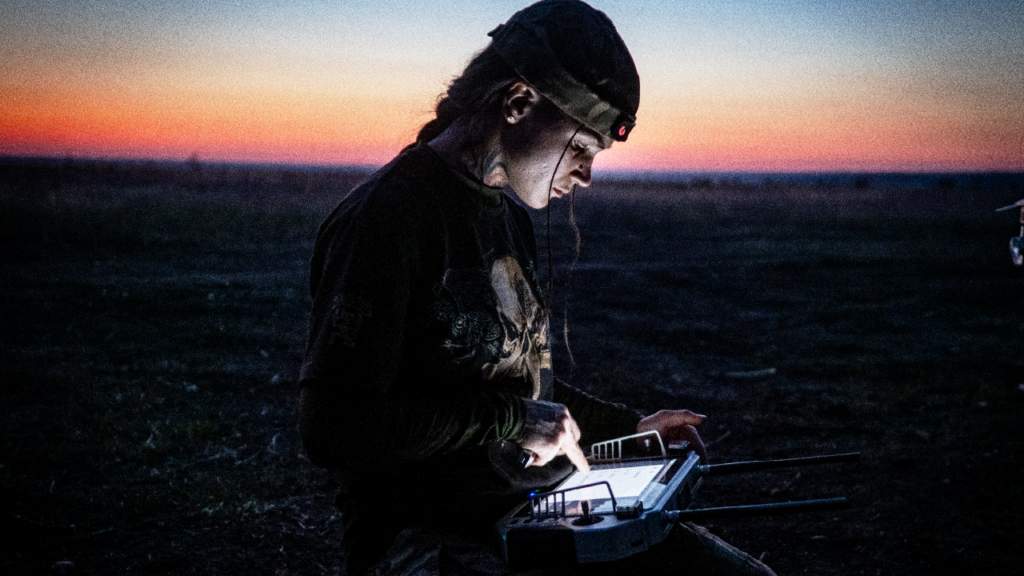
The mechanics of the system, which borrow heavily from the gaming industry, are instructive. Military drone operators earn “ePoints” (or yeBaly in Ukrainian, a colloquialism that roughly translates to “eBucks”) for verified drone strikes confirmed by video footage. Meanwhile, the military relies on civilians for crowdfunding strike packages, developing software, and assembling drones. Unit commanders assign targets based on real-time operational intelligence, surveillance, and reconnaissance (ISR) priorities; they are awarded ePoints based on verified results, thus aligning the pursuit of points with broader tactical and operational objectives. The transparency and monitoring of the mechanism enhances accountability because operators must watch what they have done. The footage acts as documentation while preventing the complete dissociation that characterizes the American experience. Points accumulate, hitting targets and achieving various objectives get recognized, and there is a legible record for each operator’s contribution to the war effort.
The Army of Drones Bonus program also helps pave over civil-military tensions. Ukraine is a society at war in a way that the United States has not been since World War II: the existential stakes are visible and immediate to every Ukrainian. The program has allowed ordinary civilians—software developers, students, retirees—to contribute directly to the war effort in ways that are militarily meaningful as well as reaffirm their value as citizen-soldiers. Gamification here provides a channel to sustain civic mobilization, much as our conceptualization of “total war” did back in the 1940s. Patriotism is more evenly distributed and not seen as the provenance of only those in uniform.
“A system that rewards kills with points, even with confirmation requirements, risks cultivating a competitive orientation toward lethal violence that could, under different circumstances or in different hands, become corrosive. “
The risks are real and should not be minimized. A system that rewards kills with points, even with confirmation requirements, risks cultivating a competitive orientation toward lethal violence that could, under different circumstances or in different hands, become corrosive. The footage that serves as accountability can also circulate as spectacle. The line between documented heroism and snuff content is not always clear on Telegram. As the Financial Times notes, drone pilots “talk about their drones the way other soldiers once talked of their rifles.They name them, encourage them in battle, curse at them.” [4] Ukraine’s wartime necessity has produced a model with genuine virtues; though whether those virtues would survive a conflict without the same existential clarity is an open question.
Crossing Russia’s Rubicon
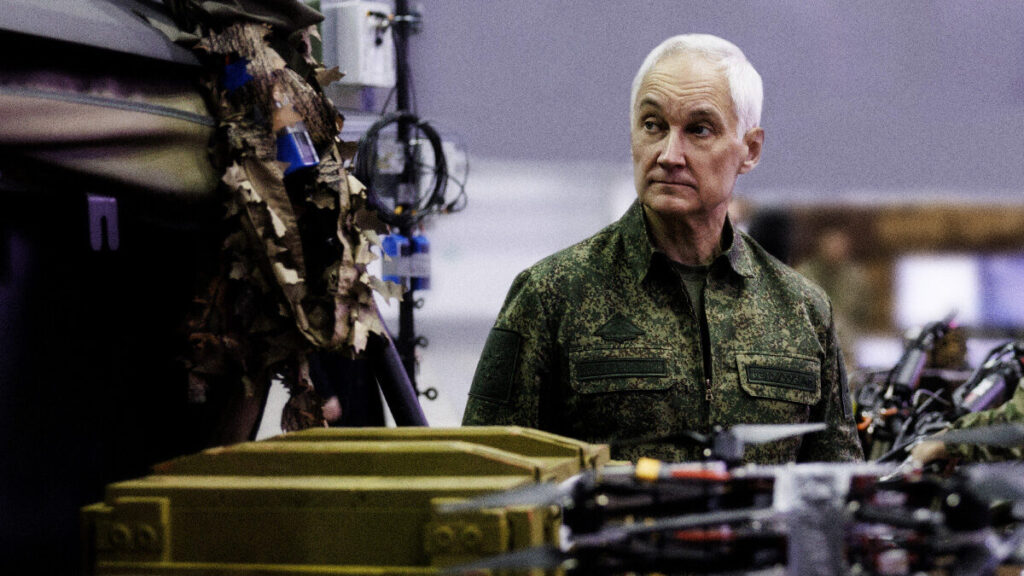
At the opposite end of the spectrum sits Russia’s Rubicon system. Where Ukraine has attempted to couple financial incentives to accountability, Russia has largely decoupled them. Formed in August 2024, the system distributes monetary rewards for verified targeting—but the verification mechanisms are virtually nonexistent, the institutional oversight limited, and the broader civic context that might give the killing moral weight absent. This hybrid and highly secret organization was reportedly established by Defense Minister Andrey Belousov and led by Col. Sergei Budnikov to initially take back Kursk oblast from advancing Ukrainian forces. The unit expanded to become an umbrella-like system to restructure Russia’s combat forces, boost their personnel size—the unit began with roughly a thousand specialists spread across seven detachments yet has since expanded to form the core of Russia’s rapidly growing unmanned forces, which now number over 5,000 personnel— and deploy more advanced drones increasingly impervious to electronic jamming and capable of striking Ukrainian targets well behind the frontlines. Unlike Ukraine’s Army of Drones, which operates through a decentralized marketplace giving individual units considerable autonomy over procurement and targeting within a framework of accountability, Rubicon is managed in a more rigid, centralized chain of command and firmly subordinated to the GRU, Russia’s military intelligence directorate. All targets are selected and approved by senior military echelons rather than by individual operators or units, and the lack of any independent verification mechanisms means no external check on whether strikes are illegal or not. The system is, in effect, an instrument of the state’s intelligence apparatus. The consequences have been predictable and well-documented. Without embedding those kills in a framework of military discipline, legal constraint, or civic accountability, the system tends to produce what sociologists of violence call “non-accountable gamified violence”: killing that is experienced as transactional rather than purposeful, and lacks the internal inhibitions that a more sophisticated military culture, at its best, is designed to maintain. The reported atrocities in Bucha and other Ukrainian battlegrounds are not reducible to the Rubicon system—the causes run much deeper—but the system is not irrelevant to them.
Russia’s model also reflects a broader pathology in its civil-military relations going back to Soviet times. The Kremlin has never sought to integrate civilian society into the war effort in the manner Ukraine has; it has sought, rather, to insulate the public from the war’s costs and realities (including making it a crime to refer to the war as a “war” publicly). Gamification in this context becomes a vehicle designed less for enhancing civil-military engagement rather than one of managing the motivation of the Russian military’s band of mercenaries, prisoners, and conscripts, given their lack of ideological commitment (payments sent to the families of fallen soldiers serve a similar purpose). The result is a military culture that is instrumentally effective in some tactical contexts, yet morally hollow in its foundations.
“While evidence that Russian gamification system deliberately rewards indiscriminate violence is not available, the structural absence of verification mechanisms in Rubicon is itself the argument: The system possesses no built-in brakes to distinguish legitimate from illegitimate targets, nor to penalize indiscriminate violence when it occurs.”
To be sure, while evidence that Russian gamification system deliberately rewards indiscriminate violence is not available, the structural absence of verification mechanisms in Rubicon is itself the argument: The system possesses no built-in brakes to distinguish legitimate from illegitimate targets, nor to penalize indiscriminate violence when it occurs. Two examples illustrate this systemic gap. A Rubicon operator who surrendered through Ukraine’s “I Want to Live” project described commanders approving strikes that injured civilians.[5] Also, in October 2025, a Russian drone killed a Russian soldier who was attempting to surrender to Ukrainian forces. [6] This latter incident is not directly tied to Rubicon, but it illustrates the broader structural void: A gamified system without independent verification has no built-in safeguards to prevent or even detect fratricidal strikes. In Ukraine’s system, by contrast, such an incident would be difficult to conceal and, crucially, would likely be investigated. Specifically, Ukrainian military drone operators must upload digital proof of their strikes into software (like Delta System) to verify their accuracy, creating a permanent, unalterable audit trail—the same footage that earns points also makes misconduct more difficult to conceal, because every strike is centrally reviewed and permanently recorded.
Heroism, Sacrifice, and the Popular Imagination
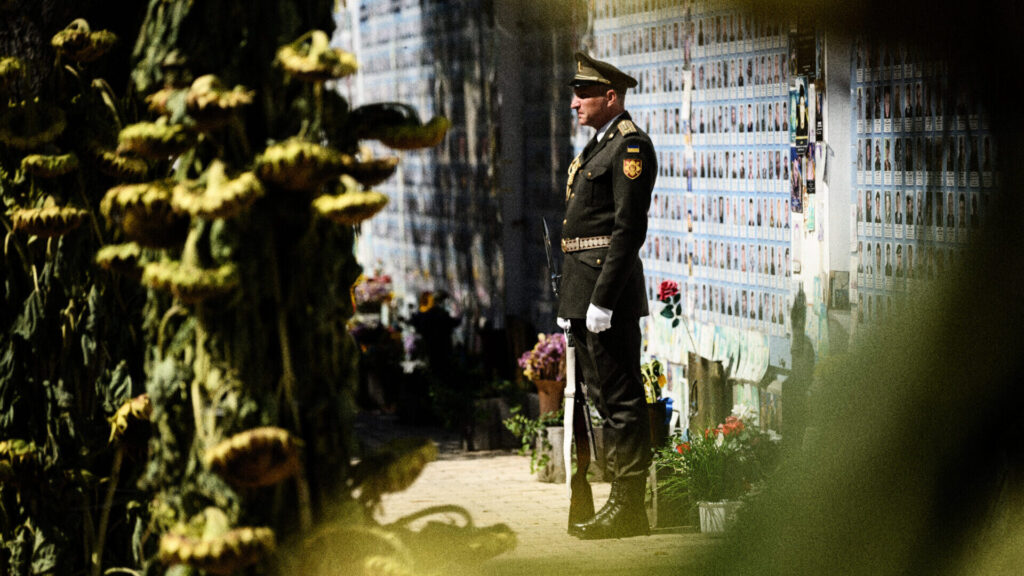
The gamification of war poses a distinct set of challenges to the profession of arms and may reshape how democratic societies understand and think about decisions to use force or go to war. Previous frameworks have historically been built around two interrelated concepts: sacrifice and heroism.
Sacrifice—the willingness to risk life and limb for a larger political cause—has traditionally been the primary mechanism through which military service is rendered legible to civilian society. It is what has historically justified the special status of veterans, the solemnity of war memorials, and the political weight of military opinion. It is also, crucially, what has made war costly in a way that constrains its use – as the Democratic Peace Theory suggests. When political leaders know that authorizing war means sending citizens to die, and that those citizens’ deaths are both visible and politically consequential, there is at least some check on the casual use of force.
Gamified warfare threatens to erode that check. If operators face no physical danger, if their work is invisible to the public, and if the experience of killing is phenomenologically indistinguishable from an evening of playing video games, then the political and moral economy of war changes. Wars will become presumably easier to start and harder to end because the feedback mechanisms governing their costs are no longer present.
“Wars will become presumably easier to start and harder to end because the feedback mechanisms governing their costs are no longer present.”
Heroism faces a related challenge. The cultural category of the hero—developed across millennia of myth, literature, and lived experience—is built around the idea of courage under conditions of physical danger. The drone operator who eliminates a target from 8000 miles away may be performing a task that requires specialized skill, judgment, and genuine moral seriousness, but it does not map onto the heroic template of the warfighter as traditionally conceptualized. The risk is that the gamification of war may lead to a cultural vacuum: because it creates a class of “warriors” who carry out the management of violence but that society cannot easily recognize or honor within its existing frameworks.
Ukraine’s response to this problem is helpful but incomplete. By building into the Army of Drones system greater accountable and confirmation mechanisms and by treating drone operators as contributors to a national effort rather than as remote technicians, Ukraine has formed a virtuous kind of civic heroism that may become a new model of modern warfare. Perhaps it is not the heroism of Thermopylae or the Somme, but it is recognizably a form of courage: moreover, it enshrines the willingness to act, to see what one has done, and to bear the weight of it in the service of something larger than oneself.

What Gamified War Means for the Rest of Us
The comparison of the three models suggests that the gamification of war is not intrinsically a net positive or negative for the profession of arms, much less for healthy civil-military relations. Rather, it depends on the institutional and social context in which it is deployed. Several criteria emerge from the analysis as markers of healthy versus pathologically unhealthy gamification.
First, accountability matters. A gamified system that requires operators to confirm and witness the consequences of their actions (as Ukraine’s model does) preserves a degree of moral seriousness that a system without such requirements cannot. Accountability is not a guarantee against atrocity, but its absence is a reliable predictor of it.
Second, the relationship between the military instrument and civilian society matters enormously. Systems that worsen the civil-military divide, as the American drone program tends to do, erode the mechanisms for greater democratic oversight that constrain the use of force. Systems that integrate civilian, political, and military spheres—in conditions of genuine existential necessity, as Ukraine demonstrates—can strengthen both military effectiveness and democratic legitimacy. The challenge is to design integration mechanisms that do not simply create new forms of civilian desensitization, or worse, make warfare more anodyne.
Third, the political purpose of relying on virtual warfare matters. Russia’s gamification is hollow because it substitutes incentives for ideology in a war whose purpose large numbers of Russian soldiers neither endorse nor understand. Ukraine’s gamification is, at least for the time being, more morally acceptable and coherent because it is embedded in a clear and widely shared political purpose: national survival. The American system occupies an uncomfortable middle ground: It is embedded in a professional military culture with genuine ethical commitments, but those commitments are not always transmitted to a drone operator isolated from the society he or she serves.
To be clear, the gamification of war is not likely to stop. The technological pressures that have produced it—the proliferation of remotely piloted systems, the rise of artificial intelligence in targeting, and the integration of commercial game engines into military simulation and training—are only accelerating. The question for strategists, policymakers, and the public is not how to reverse the trend but how to govern it ethically.
“The question for strategists, policymakers, and the public is not how to reverse the trend but how to govern it ethically.”
The evidence from the three cases above suggests that governance requires attention to at least three dimensions: the accountability structures built into gamified systems; the relationship between those systems and civilian society; and the political and moral purposes in which they are embedded. None of these is purely technical. All of them require political choice.
What the three models also collectively demonstrate is that the concepts of sacrifice and heroism are not obsolete—but they will have to be reimagined in the future. The societies that navigate this process most thoughtfully will be those that can honor the genuine courage and moral seriousness of a new kind of warrior while maintaining the democratic oversight required to constrain the use of force. It will require politicians and military leaders to recognize war for what it is: a battle of wills between two opposing societies. No amount of gamification or counting of points can replicate that reality.
Comparative Framework: Three Models of Gamified Warfare
Table 1. Primary characteristics of gamification systems across three contemporary military actors.
| United States | Ukraine | Russia | |
| Primary Gamification System | MQ-1 Predator / MQ-9 Reaper drone programs | Army of Drones Bonus (“ePoints”) | “Rubicon” system |
| Institutional Logic | Bureaucratic–operational efficiency; force multiplication at distance | Overcoming bureaucratic friction; decentralized coordination; wartime innovation | Incentivized targeting; centralized reward distribution |
| Relationship to Society | Deepens civil–military divide; produces “post-patriotic” professionalism | Integrates civilian and military spheres; leverages civic mobilization | Disconnected from broader civic accountability |
| Psychological Effect on Operators | “PlayStation mentality”: dissociation from lethal acts; moral injury | Virtual heroism: morally engaged agency under existential threat | Non-accountable gamified violence |
| Accountability Mechanism | Limited; geographic and psychological distance from consequences | Mandatory video confirmation of verified strikes | Absent or unverified |
| Outcome | Dissociative remote warfare | Virtual heroism | Gamified violence (non-accountable) |