
Image Credit
13 minutes
President Franklin Roosevelt did not suffer from a shortage of information about China. By the final years of World War II, American officials were reporting, often bluntly, on the weaknesses of Chiang Kai-shek’s Nationalist government: corruption, factionalism, military deficiencies, and the unresolved struggle with the Chinese Communists. Although Roosevelt knew much of this, he also wanted China to become something it was not. He imagined a strong, unified, politically representative China capable of helping the United States stabilize postwar Asia and participating as one of the world’s great powers.
Judging from the benefit of hindsight, it was not simply that Roosevelt lacked facts. It was that the facts about China were interpreted through a prior conception of the role China ought to play in the order he hoped to build. Eight decades later, the United States may face a related danger.
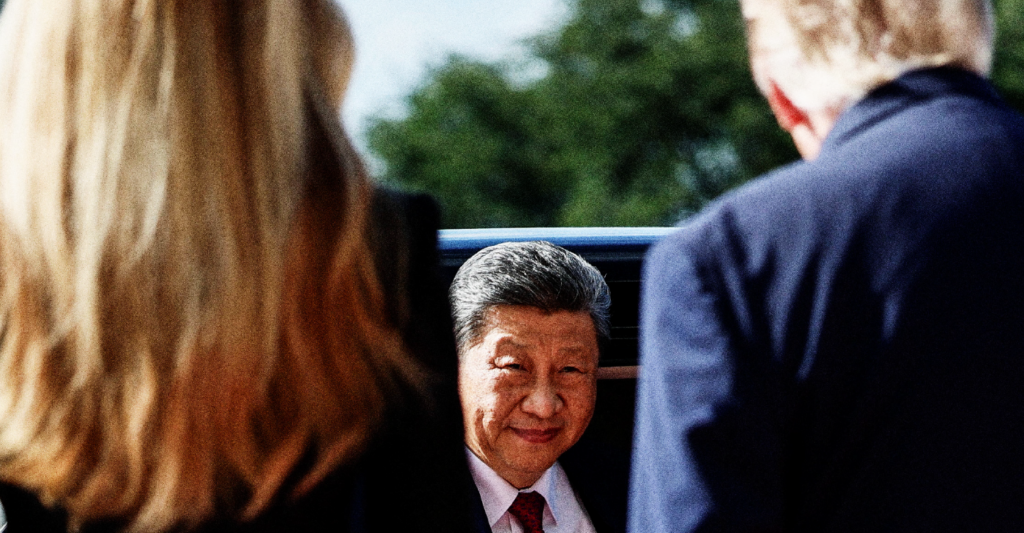
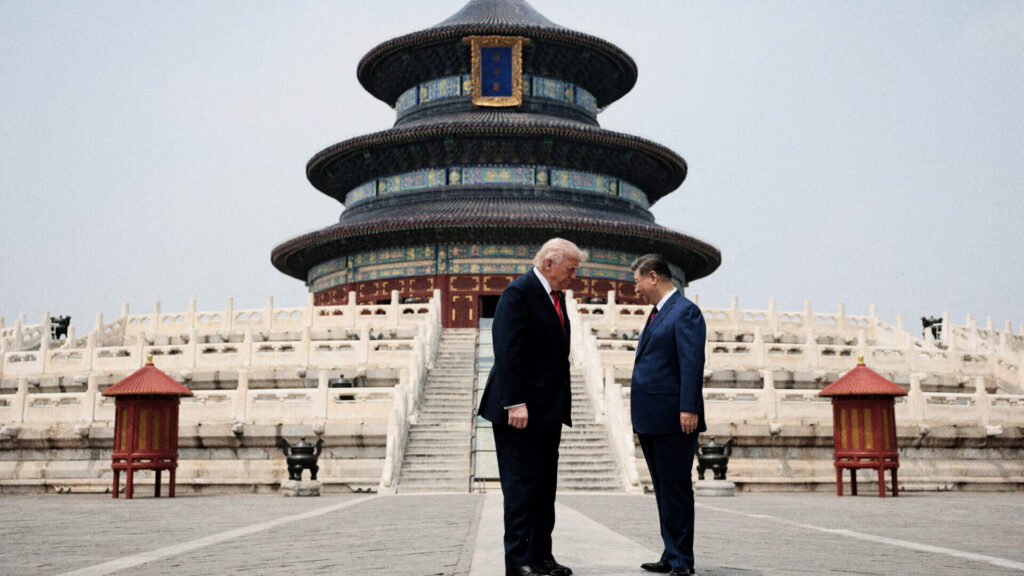
During Xi Jinping’s recent visit to Washington, the Chinese leader presented President Donald Trump with an appealing vision of the bilateral relationship. China and the United States, Xi observed, could build what he calls a “constructive relationship of strategic stability.”[1] Cooperation could become the mainstay of the relationship while competition could be kept within proper limits. Differences could be managed and conflict avoided. In his arrival remarks, Xi went further, noting that competition need not become a zero-sum struggle, respective military dialogues should continue and, strikingly, that the “Thucydides Trap can be overcome.”[2]
“Cooperation with China should not be undesirable simply because Beijing proposes it. But American strategy becomes vulnerable when the China that Washington wants to deal with begins to displace the China that Washington is actually dealing with.”
None of that is inherently implausible. Cooperation with China should not be undesirable simply because Beijing proposes it. But American strategy becomes vulnerable when the China that Washington wants to deal with begins to displace the China that Washington is actually dealing with.
Roosevelt’s China
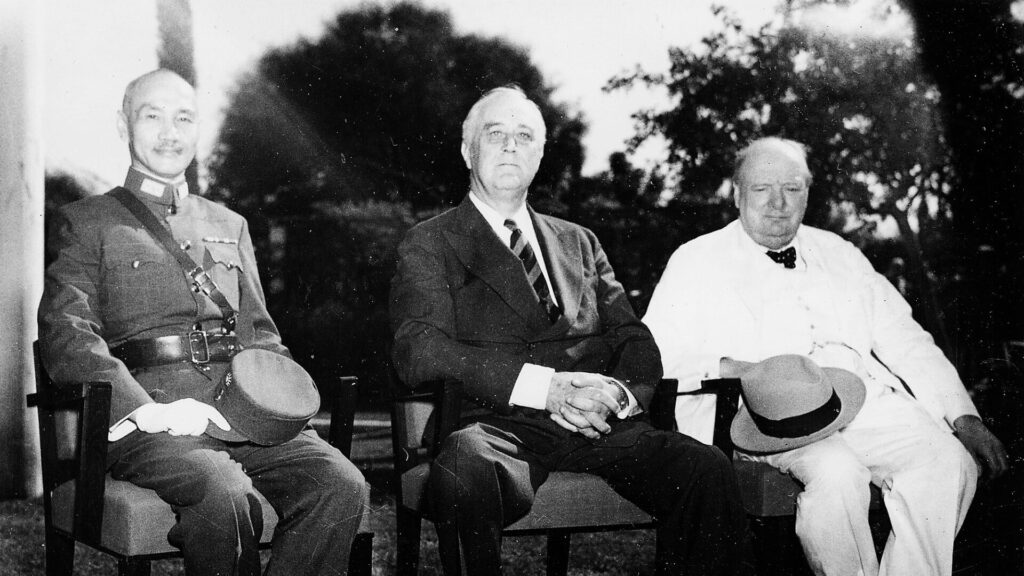
Roosevelt’s wartime policy toward China was ambitious precisely because China was weak. At Cairo in November 1943, Roosevelt told Chiang that China should take its place as one of the “Big Four” and participate on an equal footing in their machinery.[3] The proposal was not merely ceremonial: Roosevelt wanted China to play a major role in the postwar settlement and stability of Asia. The following year, Vice President Henry Wallace conveyed Roosevelt’s view that China should become a great power “in fact as well as in theory.”[4]
That aspiration was institutional as well as geopolitical. China’s elevation would ultimately be reflected in a permanent seat on the UN Security Council. A 1947 State Department assessment later acknowledged the unusual character of this arrangement with striking candor: China was considered one of the great powers “due principally to United States support and insistence.”[5] Roosevelt was therefore not responding only to Chinese power as it existed; he was also helping to construct the position he believed China should occupy.[6]
The logic behind that policy was understandable. American planners wanted a durable Asian balance after Japan’s defeat. A stable China could help prevent the re-emergence of Japanese militarism, complicate Soviet expansion, further weaken European colonial arrangements, and reduce the burden that the United States would otherwise bear in maintaining order across the region. By 1945, US policy documents were describing the long-range objective plainly: China was to become a “principal stabilizing factor in the Far East,”[7] strong, stable, united, and governed in a manner representative of the wishes of its people.
“American planners wanted a durable Asian balance after Japan’s defeat. A stable China could help prevent the re-emergence of Japanese militarism, complicate Soviet expansion, further weaken European colonial arrangements, and reduce the burden that the United States would otherwise bear in maintaining order across the region.”
The difficulty was that China itself was moving in another direction, a fact not hidden from Washington.[8] Roosevelt was, according to one contemporary American account, “fully advised” of the Nationalist government’s imperfections and of the difficulties American officials encountered with Chiang.[9] Wallace warned in 1944 that the Nationalist government might collapse because American military and diplomatic officials recognized the depth of internal division. A struggle that Washington hoped might be reconciled into political unity instead became a civil war between Chiang’s Nationalist Kuomintang party and Mao Zedong’s Chinese Communist party.
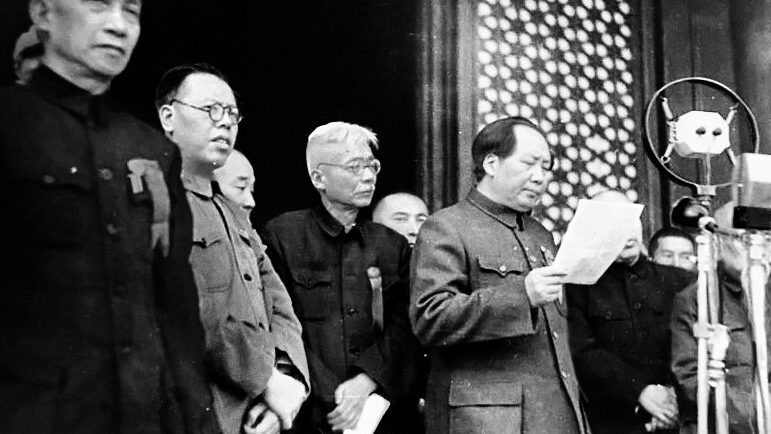
Roosevelt died before seeing the final result. In 1949 the Communist Party defeated Chiang’s government on the mainland, and Mao proclaimed the People’s Republic of China. The China that emerged was not the democratic, unified partner Roosevelt had imagined within an American-designed postwar settlement. Rather, it was a revolutionary Communist state soon aligned with Moscow and at war with the United States in Korea.
Calling this merely a failure of intelligence misses the point. Roosevelt possessed considerable intelligence. What failed was the conversion of information into sound judgment. The United States knew what China was. Nevertheless, American strategy placed enormous weight on what policymakers hoped China could become.
The Seduction of the Preferred China
The historical lesson here is not that presidents should distrust China. It is that great-power strategy becomes dangerous when description and aspiration begin to merge. Every US administration possesses an implicit model of the other states with which it deals. Those models are unavoidable. Leaders have to assess what an adversary wants, what it fears, what it will trade, what it will defend, and what kind of relationship it ultimately seeks.
How states perceive one another is significant because those perceptions shape the threats they recognize and the policies they pursue.[10] Leaders do not interpret another state’s behavior in isolation. They bring expectations to the task, and those expectations can color what they see, sometimes carrying more weight than the evidence before them. A military move intended as a precaution may be taken as preparation for aggression, inviting a response that increases the danger for both sides. Yet misperception need not always exaggerate a threat; it can just as readily obscure one. A government expecting cooperation may interpret a conciliatory gesture as evidence that the other state’s ambitions have changed, but it may have no such meaning. The danger is particularly acute when the relationship leaders hope to establish begins to influence their judgment of the country with which they are actually dealing.
The problem begins when the model becomes resistant to contradictory evidence. Roosevelt’s preferred China was a future-oriented construction: a China becoming strong enough, unified enough, and representative enough to perform the stabilizing role he had assigned it. The geopolitical need was real and it was this need that created an interpretive temptation. Because the postwar order worked better if China became that kind of state, contrary evidence was repeatedly placed inside a framework that assumed such a transformation remained achievable.
The question facing the Trump administration is not whether it will repeat Roosevelt’s policy. The two periods are too different for that. Rather, the question is whether the same cognitive mechanism can recur. Because, note well: Xi is offering Washington a preferred China of its own.
“In Beijing’s current formulation, China is to Washington a competitive but responsible great power that seeks stability rather than confrontation.”
In Beijing’s current formulation, China is to Washington a competitive but responsible great power that seeks stability rather than confrontation. It is a China that accepts competition, but only competition “within bounds.” It seeks trade, dialogue, military crisis management, and cooperation on shared problems. China’s rejuvenation and America’s prosperity, Xi specifically observed in Washington, can proceed together. There are reasons an American president might find this conception attractive.
For Trump, however, there is likely an additional temptation. His political style places unusual confidence in the possibility that difficult relationships can be transformed through bargaining, personal diplomacy, and making deals. While that confidence can be an asset when inherited assumptions have hardened into stalemate, it can also create a particular form of strategic vulnerability: the belief that because an agreement can be made, the underlying conflict of interests has in itself become more negotiable.
Trump has repeatedly emphasized the possibility of agreements between powerful leaders. His administration has already endorsed the language of a “constructive relationship of strategic stability.”[11] Indeed, the two governments have reached economic understandings, extended a trade truce, and maintained direct leader-level diplomacy even while disputes over technology, Taiwan, trade, and strategic influence still remain unresolved.[12]
A more stable relationship could produce real benefits. Reducing the risk of military escalation is not appeasement. Prioritizing crisis communication is not capitulation. Concluding trade agreements does not require strategic naiveté. Great powers routinely cooperate where their interests overlap while competing elsewhere. But the analytical danger here lies in mistaking China’s interest in stability as evidence that the underlying strategic contest has become less consequential than it is.

Competition Without Hostility or Competition on Beijing’s Terms?
Xi’s language deserves to be taken seriously because it is carefully constructed. When Beijing says cooperation should become the “mainstay”, while competition remains within “proper limits,” it is not proposing an end to competition. It is proposing a framework for defining legitimate competition. This continues the arc of the relationship over the last several administrations.
But who decides what the proper limits are? From Beijing’s perspective, American restrictions on advanced technology can be described as containment. US support for Taiwan can be characterized as interference in China’s internal affairs. Alliance strengthening in the Indo-Pacific can be presented as bloc confrontation. Simultaneously, American officials may regard these same policies as ordinary measures of deterrence, resilience, and alliance management. So the dispute, then, is not merely about whether the two countries should compete. It is about the meaning of competition itself.
This is why the Thucydides Trap metaphor can obscure as much as it reveals. The central danger now is not simply that a rising China and an established United States are structurally destined to collide. Nor is the solution simply to substitute cooperation for rivalry. The harder problem is interpretive: Each side is continually assigning meaning to the other’s actions. Military modernization can be read as preparation for aggression or as insurance against coercion. Technology controls can be understood as defensive protection or as an attempt to prevent national development. Alliance consolidation can be understood as deterrence or encirclement. Economic interdependence can be interpreted as mutual restraint or as a source of leverage. States do act on these interpretations, so a misdiagnosis can change the strategic environment it is trying to explain.
Here Roosevelt’s experience becomes newly relevant. The risk was not that he wanted a constructive relationship with China. It was that the role he needed China to perform influenced the China he believed could emerge. Today, Washington must avoid an equivalent inversion: deciding first what kind of relationship it wants with Beijing and then allowing that preference to define what China is.
Seeing China As It Is
Seeing China as it is does not mean presuming that every Chinese initiative conceals aggression. That disposition merely substitutes one kind of preferred image for another. A China interpreted exclusively through the lens of inevitable hostility can be just as distorting as a China interpreted through the lens of inevitable accommodation. The diagnostic task is harder: to permit contradictory truths to coexist.
China can prefer peace and still seek major changes in the regional balance, just as it can want extensive trade and still use economic dependence for strategic advantage. It can also support crisis-management mechanisms with the United States while simultaneously increasing military pressure around Taiwan. It would not be abnormal for China to seek cooperation with America in some domains while trying to reduce its influence in others.
None of these combinations are unusual in international politics. They become difficult only when political rhetoric or our mental models demand that China be placed into a single category: partner or adversary, status quo power or revisionist power, cooperative stakeholder or existential threat. Strategic judgment begins by resisting that demand.
The Roosevelt case suggests a useful diagnostic sequence. First, ask what policymakers know. Then ask how they interpret what they know. Finally, ask what political or strategic need is shaping that interpretation. That third question is often neglected. Roosevelt needed China to help populate his vision of a postwar order. That need did not invent every assumption he made about China, but it is hard to argue it did not create pressure toward a particular reading of Chinese possibilities.
What Does the United States Need From China Today?
Above all, the United States needs a relationship that does not end in catastrophic war. This, too, is in the Chinese national interest. The United States also needs predictable economic interaction. It may need cooperation on global finance, artificial intelligence, climate risks, pandemics, maritime security, or conflicts involving third countries. It needs, in short, a China with which agreements remain possible. Those needs are real. But they can also become lenses.
If Washington requires China to be sufficiently transactional for durable bargains to work, it may begin overvaluing evidence of Chinese transactionalism. If it requires Xi to prioritize economic stability over geopolitical ambition, it may interpret Chinese economic pragmatism as evidence that strategic objectives are softening.
“If Washington requires China to be sufficiently transactional for durable bargains to work, it may begin overvaluing evidence of Chinese transactionalism.”
For a president whose political identity is closely associated with deal-making, successful negotiation may present an additional interpretive hazard in that the deal itself can be viewed as evidence for a broader theory of the relationship. If personal diplomacy appears to produce agreements, it may encourage the belief that leader-to-leader relationships can definitively resolve conflicts rooted in deeper structures, interests, and political commitments. And it is here that Roosevelt’s experience becomes warning rather than analogy.
The China that Roosevelt wanted to see never fully existed. The danger for Trump is not that he will merely reproduce Roosevelt’s circumstances, policies, or outcome. It is that every president confronting China faces the same temptation: to confuse a desired relationship with a diagnosed reality. Avoiding that error requires a kind of strategic sobriety on the part of Washington.
Xi may be right that the Thucydides Trap can be overcome. There is nothing inevitable about war between China and the United States. But avoiding one trap should not require walking willingly into another. A more subtle trap would be to believe that because cooperation is necessary, the other power must therefore be becoming the kind of power with which one hopes to cooperate. Roosevelt’s experience suggests otherwise.
The first obligation of strategy is not to see the world as we fear it to be, or as we hope it will become. It is to see it as it is.