
17 minutes
The most consequential nuclear challenge US policymakers face is determining what kind of nuclear relationship with Russia and China is desirable and/or possible in an era of heightened competition and conflict. Choices the United States makes about its nuclear relations with its most powerful adversaries will have a profound impact on its overall bilateral relations with them and should shape any assessment of the proper size and posture of US nuclear forces.
US nuclear relations with both Russia and China have reached a crossroads in 2026. In February, the New Strategic Arms Reduction Treaty (New START), the last remaining bilateral nuclear agreement between Russia and the United States, expired. New START, which entered into force in 2011, placed verifiable limits on US and Russian nuclear warheads and the delivery systems associated with them that have intercontinental-range. The expiration of New START means that for the first time since the end of the Cold War, the two countries lack any legally binding bilateral mechanisms limiting the size and posture of their nuclear forces. According to President Vladimir Putin, the demise of New START is directly linked to the conflict in Ukraine and the dramatic downturn in relations between the two countries.
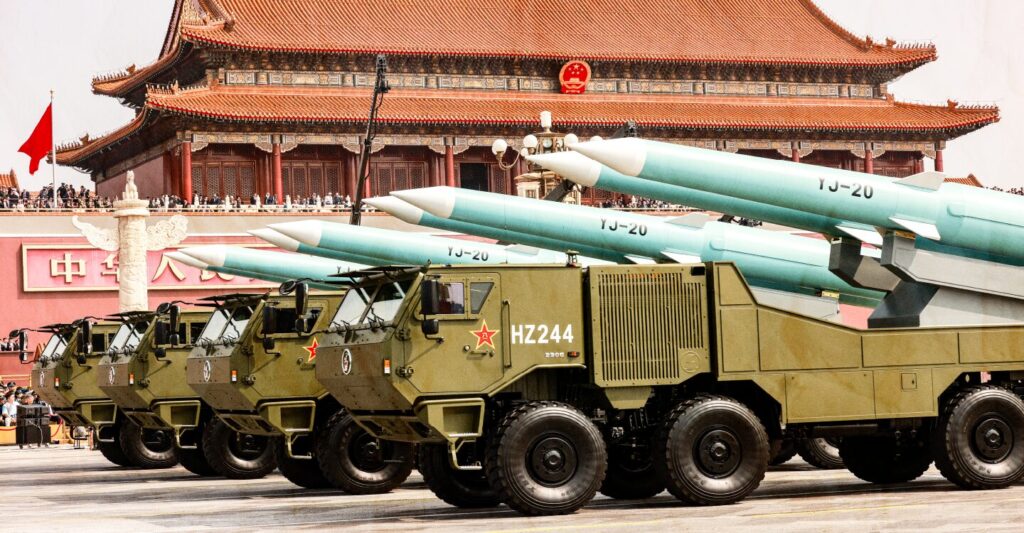
China is now regarded as the “pacing challenge” for US national security policy. In the nuclear sphere, China has initiated a dramatic buildup in the size and sophistication of its nuclear forces. This includes a major increase in its intercontinental-range nuclear delivery systems, particularly its land-based nuclear missiles, and an expected quadrupling in the total size of its arsenal by 2030. Although China’s overall nuclear forces will remain smaller than those of the United States for the foreseeable future, China for the first time will possess a force that could meet the criteria for the assured destruction of American society. This change moves nuclear issues with China into a new status, increasing their importance in US-Chinese bilateral relations.
What Are Nuclear Relations?
The term “nuclear relations” is not a concept that has been strictly defined in the international relations literature. Scholars have, however, noted for decades the ways in which the destructive properties of nuclear weapons and the delivery systems associated with them influence bilateral relations. Indeed, the presence of nuclear weapons shape diplomatic, military, and strategic interactions between states in profound ways, although their role is not always openly stated. In the simplest terms, therefore, nuclear relations are how nuclear weapons impact and shape relations between sovereign countries.
Nuclear relations are based upon the overall status of bilateral relations operating alongside the nuclear military capabilities of each state. The prominence of nuclear forces in a bilateral relationship emerges from the capability of one side or both to target each other with nuclear weapons, the degree of hostility or strategic competition (or cooperation) between the two states, and how each side communicates the role it sees for nuclear weapons in the relationship.
Nuclear relations can range from cooperative to adversarial. One potential aspect of cooperative nuclear relations is the direct exchange of nuclear weapons equipment, technology, and information. For example, the United States and the United Kingdom for over 60 years under a mutual defense agreement have exchanged nuclear materials, components of nuclear weapons, and submarine reactors. Another form of cooperation is the coordination of independent nuclear forces, such as planning for a joint response to a nuclear threat or agreement on how each side would target an adversary. France and the United Kingdom, in the recently signed Northwood Declaration, agreed to this step alongside additional coordination across nuclear policy, capabilities, and operations. A final form of cooperation is nuclear sharing. In the NATO context, non-nuclear states agree to host and provide support for US nuclear forces. The Nuclear Planning Group within NATO provides a mechanism for joint planning and a training program for the potential use of nuclear weapons.
Cooperative arrangements build trust and confidence between nuclear-armed states and between nuclear-armed states and non-nuclear powers. They provide information about the other side’s views on the circumstances in which it might use nuclear weapons and their nuclear capabilities. Joint institutions provide a degree of coordination on nuclear policies and assurance that nuclear forces in extreme circumstances will protect them. These steps contribute to a bilateral relationship where another state’s nuclear weapons are viewed as contributing to security and not, despite the vast powers nuclear weapons confer, a threat.
Adversarial bilateral nuclear relations, by contrast, are defined by a country building, deploying, and posturing nuclear weapons in a manner that is a direct military threat to another state. This threat is often officially conveyed by nuclear doctrine, which outlines the role of a state’s nuclear weapons and defines the circumstances under which they might be used.
In general, nuclear threats are an outgrowth of a bilateral relationship defined by direct strategic competition and conflict. Often, the role of nuclear weapons in adversarial relationships is tied to a potential military clash between the two sides that could credibly trigger in extreme circumstances nuclear use. Sometimes however, nuclear threats stem from the other side’s nuclear weapons posture and the size of its forces, which trigger concerns unconnected to a conventional military scenario. For example, when the Cold War ended, the United States altered its defense planning to regional conflicts and away from a major conventional war in Europe. Yet, the United States and Russia maintained large, highly capable nuclear forces that can only be explained by fear of the other side’s nuclear capabilities and lingering mistrust between the two.
One potential tool for managing an adversarial nuclear relationship is arms control, which is defined as “all the forms of military cooperation between potential enemies in the interest of reducing the likelihood of war, its scope and violence if it occurs, and the political and economic costs of being prepared for it.”[1] In a bilateral relationship with arms control, leaders believe the benefits of avoiding a nuclear exchange through miscalculation or accident have greater value than efforts to achieve nuclear superiority[2] over your opponent. Henry Kissinger described the Nixon administration’s arms control approach toward the Soviet Union as “treating the communist world as both an adversary and collaborator; adversary in fundamental ideology and in the need to prevent communism from upsetting the global equilibrium, collaborator in keeping the ideological conflict from exploding into a nuclear war.”[3]
Introducing arms control into a bilateral relationship implies a degree of trust between the two sides, or at least the possibility of achieving one. Negotiating agreements and treaties with your adversaries is only a worthwhile enterprise if you believe the other side will uphold and carry out treaties it signs on to. Concerns about violations of agreements can be mitigated by verification measures, but a certain level of trust is required between the parties in any complex arms control negotiation. Arms control also confers legitimacy on your negotiating partner. It implies in the international arena that you regard them as a normal actor with whom you can conduct diplomacy and reach agreements.
US Nuclear Relations with Russia
Nuclear weapons are a central component of US-Russian relations. Starting in the détente period of the Cold War, the United States and the Soviet Union (and later Russia) sought to minimize the costs and risks of nuclear competition and maintain strategic stability.[4] This goal was achieved through arms control agreements that provided for a rough parity of the two sides’ strategic nuclear forces and risk reduction measures that sought to reduce the dangers of an accidental or inadvertent nuclear war. Monitoring and verification measures further contributed to strategic stability by providing transparency on the current status of nuclear forces and insight into future nuclear systems being developed.
This cooperative approach to nuclear relations occurred simultaneously with military efforts to build, deploy, and maintain US nuclear forces to deter Russian attacks against the United States and US allies. Even after the Cold War ended, when conventional conflict between Russia and the United States seemed unlikely, deterring Russian nuclear forces remained the primary mission of US nuclear forces. Thus, even during the most positive periods of US-Russian relations, nuclear relations remained at their core adversarial.
For contemporary Russia, bilateral nuclear relations with the United States also serve another purpose. Nuclear weapons are perhaps the only area where Russia remains the equal of the United States, and this is a source of international prestige for Russia’s leaders. High-profile nuclear-related summits have consistently served as an opportunity for Putin to put himself on the same level as various US presidents.
The end of legally binding bilateral arms control, which had been a defining feature of US-Russian nuclear relations, is directly linked to the conflict in Ukraine and the downward spiral of US-Russian relations. Putin has repeatedly said he sees the Ukraine war as a battle between Russia, NATO, and the “collective West,” and this battle with the West means arms control as it was practiced before the war is impossible. In his speech suspending the implementation of the New START Treaty in 2023, Putin called US requests to inspect defense facilities, a verification requirement of the New START treaty, the “theater of the absurd.”[5] Putin asked how Russia could allow US inspectors onto its military facilities, in the midst of Ukrainian efforts, assisted by US intelligence services, to strike Russian strategic aviation bases.
From the Russian perspective, the problem with New START was the advantages provided to the United States through inspections on Russian soil and the exchanges of data on nuclear forces, not the central limitations on its nuclear forces. Before the war, Russia accepted the need for on-site inspections to verify the missile and warhead limitations contained in the treaty. Once the war started, these inspections were now intolerable because they would allow a hostile power, with the stated goal of imposing a strategic defeat upon Russia, the ability to gather actionable intelligence on Russian forces, which could be passed on to Ukraine.
Even though the treaty has now expired, Putin has offered to voluntarily adhere to its limitations as long as the United States does the same. The United States has not responded to this offer, only indicating that future arms control measures must include China.
Within this context, the direction of US-Russian nuclear relations will be shaped by US perspectives on several questions.
Is rough parity of nuclear forces still the right measuring stick with Russia, or should the United States seek nuclear superiority through enhanced strategic nuclear forces and global missile defenses?
How fragile is strategic stability without legally binding arms control agreements?
Is Russia trustworthy enough to reach arms control agreements with? Have they now become a revisionist rogue state that refuses to adhere to any of its international obligations?
Should the United States continue to treat Russia as an equal of the United States in the nuclear field, conferring power and legitimacy to its leadership through arms control negotiations?
US Nuclear Relations with China
Until fairly recently, nuclear weapons played only a minor role in US-Chinese bilateral relations. Far more important were economic ties, regional tensions over Taiwan and the South China Sea, human rights, and China’s role in global issues such as non-proliferation and climate change. In 2014, China became America’s largest trading partner, highlighting the high level of economic and social interaction that dominated the bilateral relationship. China’s nuclear arsenal for decades was small and postured for a strategy of limited assured retaliation, the ability to deliver an effective and limited nuclear counterattack after absorbing an initial strike. Since 1964, China’s official nuclear doctrine has been no first use, a defensive stance that means it will only use nuclear weapons after it has suffered a nuclear attack.
Nuclear issues were rarely discussed at the leadership level and, despite US efforts, the United States and China never developed robust diplomatic channels to discuss strategic matters. The United States was mostly content with this situation, believing China could be deterred with US nuclear forces sized and postured for Russia and that discussions about nuclear weapons would distract from more positive and productive areas of the US-Chinese relationship.
The United States now finds itself in a completely different situation. China has emerged as a formidable nuclear competitor with the deployment of a large number of strategic nuclear forces targeting the United States and regional nuclear forces that could serve as a retaliatory capability against US conventional strikes. Finally, despite its large buildup of nuclear forces, China has not acknowledged or offered an explanation for its expansion and refuses to engage in substantive arms control negotiations or confidence-building measures.
What type of nuclear relationship the United States should strive for with China is complicated by two sets of issues. First, current US nuclear strategy is based upon a quantitative and qualitative superiority of its strategic nuclear weapons vis-à-vis China. There is a belief that US nuclear superiority tempers China’s regional military aggression because at the highest level of nuclear escalation the United States can limit the damage China can cause to the United States. Keeping this advantage in the face of China’s nuclear buildup will not be easy, requiring a significantly larger US nuclear force and highly capable missile defenses.
In terms of bilateral relations, an attempt to retain nuclear superiority through a large buildup of US nuclear forces directed at China would be a clear indication of a nuclear arms race, heightening each side’s nuclear fears of the other. This arms race would likely spill over into US-Russian nuclear relations as well, with Russia responding with its own buildup to retain strategic nuclear parity with the United States. By contrast, not responding to China’s buildup could undermine US efforts to deter Chinese regional aggression.
Second, while trade, investment, and social interactions between the United States and China have decreased over the last several years, they remain robust. It is unclear whether an intensely adversarial nuclear relationship, with no arms control or guardrails to restrain it, can exist alongside deep levels of financial and economic integration. Tradeoffs will probably be required between maintaining economic ties and unconstrained nuclear competition.
As with Russia, the direction of US-Chinese nuclear relations will be shaped by US perspectives on a number of questions.
Should the United States raise nuclear issues at the leadership level? Where do nuclear issues rank among the multitude of other critical issues the United States would like to discuss with China?
How important is it to maintain nuclear superiority against China? Is it even possible in the long-term versus a country with vast resources and manufacturing capabilities?
What are the costs and benefits of acknowledging China’s assured destruction capability against the United States? Does acknowledging this situation make it more or less likely that the United States can achieve strategic stability with China through arms control?
Are there ways to impose costs or provide incentives that will encourage China to enter into a dialogue about ways to avoid a nuclear exchange through miscalculation or accident?
Options
The United States has a variety of options it can strive for in US-Russian and US-Chinese nuclear relations. These options elucidate the choices policymakers confront about whether to seek strategic stability with Russia and/or China or if US national security would be better served by efforts to achieve nuclear superiority. US officials will also need to determine whether arms control is possible and desirable with China and Russia’s current leadership and where nuclear weapons fit in bilateral relations with both. Unlike in the past, the dual nuclear threats posed by Russia and China require consideration of how the nuclear relationship with one adversary will impact US nuclear relations with the other.
Below are a few options the United States could seek, although others are possible.
Option 1: Seek Clear Nuclear Superiority Over China and Russia
In this option, the United States would base its nuclear relations on a purely competitive model and would be unconcerned about maintaining strategic stability with its adversaries. The United States would embark on a large-scale buildup of its nuclear forces in an effort to develop a force capable of limiting the damage Russia and China could cause in a retaliatory strike to a manageable level. Part of this strategy would include major investments in strategic defense, including Golden Dome, with the aim of the system being directed at intercepting as many nuclear forces of Russia and China as possible. Diplomatic efforts under this option would focus on entrenching US superiority over its nuclear adversaries.
Option 2: Seek Strategic Stability with Russia at a Force Level Adequate to Maintain Nuclear Superiority Against China
Under this option, the United States, with Russia, would seek to continue an arms control process to maintain strategic stability and rough parity in nuclear forces. The United States would seek to match the projected increase in Chinese nuclear forces and get Russia to agree to a higher ceiling for strategic nuclear forces. This would allow the United States to maintain its current nuclear strategy, strategic superiority in the nuclear sphere, against China. In terms of nuclear relations with China, the United States would continue to focus bilateral relations on other issues with the perspective that fruitful nuclear discussions with China are not possible. Arms control with Russia under this option would look different from in the past, with both sides agreeing to force levels through political agreements rather than legally binding treaties with strict monitoring and verification measures.
Option 3: Focus Arms Control Efforts on Reducing Nuclear Risks with China, Ignore Russia
If China is the pacing national security challenge of the 21st century and the chances of a nuclear conflict with China have increased, the United States could choose to focus its efforts on achieving strategic stability and reducing nuclear risks with China. In this option, the United States at the leadership level would press China to begin nuclear discussions with the incentive that the United States would acknowledge the two countries are in a situation of mutual assured destruction with each other. The United States would then attempt to build a nuclear relationship with China similar to the one it had with Russia before the Ukraine war, one based upon mutual deterrence and the aversion of a nuclear exchange through miscalculation or accident. Under this option, the United States would regard Russia as a weak, rogue international actor with which it cannot reach agreement and which it can deter with current nuclear force levels.
Conclusion
In March 2026, Robert Kadlec, the assistant secretary of defense for nuclear deterrence, chemical, and biological defense, announced that the Pentagon would be conducting a “nuclear strategy review” to assess strategic force requirements and potential additional theater nuclear weapons programs. In congressional testimony, he said this mini-review was in lieu of a full nuclear posture review and would narrowly focus on the pace of nuclear modernization and whether US nuclear forces were robust enough to deter both Russia and China simultaneously.
The Trump administration’s approach to nuclear strategy, which only focuses on military force requirements, is a serious mistake. It ignores the profound consequences nuclear weapons have on bilateral relations with China and Russia and how shifts in the US nuclear posture might impact strategic stability, potentially increasingly the chances of a nuclear exchange through miscalculation or accident. Instead, the first step in the administration’s review should be an appraisal of the current status of US nuclear relations with key adversaries and what kind of nuclear relationship from the US perspective is desirable over the coming decades.