
Image credit
9–14 minutes
US national security interests would benefit from a stronger Europe in a stronger NATO—but to develop a stronger NATO, the alliance needs steadfast American commitment and leadership
Introduction
Allied leaders breathed a sigh of relief upon returning to their capitals following the NATO Summit in Ankara, Türkiye this July. The summit got off to a rocky start when a visibly irritated President Donald Trump arrived consumed by the (still ongoing) war in Iran war and his perceived lack of support from European allies for US operations in the region. But after two days of pageantry and meetings, NATO Secretary-General Mark Rutte secured a solid summit communique[1] that reaffirmed allied commitment to NATO’s Article 5 collective defense pact. Rutte was also able to show that Canada and European allies are spending more on defense—$139 billion in 2025 alone[2]—and he hosted the largest Defense Industry Forum in the alliance’s history, bringing together allied heads of state and government, ministers, and industry leaders to provide for NATO’s deterrence and defense. Trump’s closing press conference even highlighted the “tremendous love”[3] and unity on display among allied leaders in Ankara.
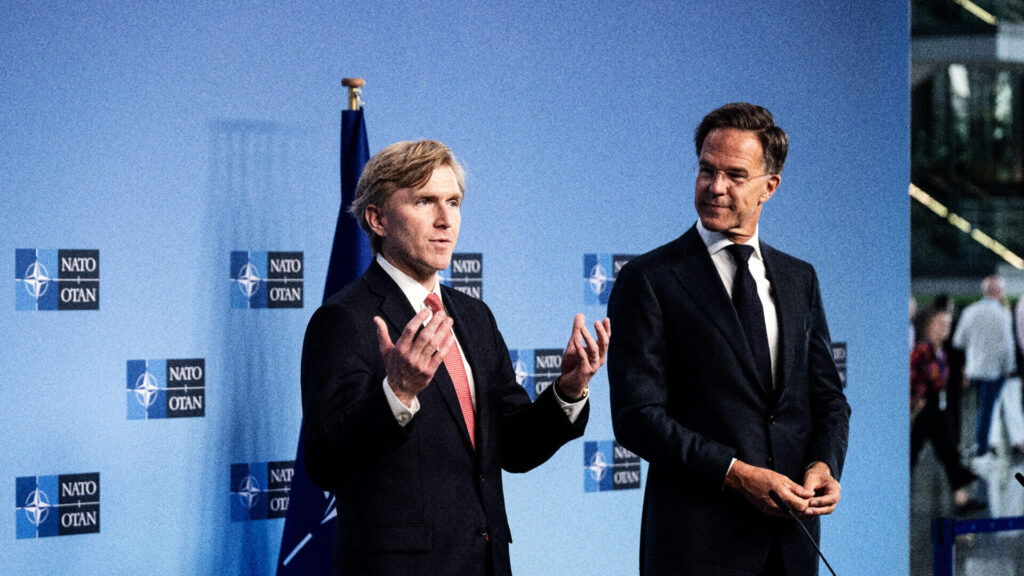
But the summit only served to paper over a significant shift occurring within the alliance, one in which European allies are attempting to assume more responsibility for the conventional defense of the continent while the United States wrestles with how to provide more limited support. This process—dubbed “NATO 3.0” by Undersecretary of War for Policy Elbridge Colby—has become the main direction of travel across the alliance since Colby announced the policy at the February 2026 NATO Defense Ministerial.
According to Colby, NATO 3.0 is meant to signify a return to “NATO 1.0”—the Cold War-era NATO in which allies knew how to fight together at scale, maintain strong national defenses, and manage deterrence, and which succeeded in staring down the Soviet Union because allies were expected to pull their weight.[4] “NATO 2.0,” defined by Colby as the post-Cold War NATO model of European disarmament, out of area operations, and overdependence on US financial and military contributions, is no longer fit for purpose.
The administration is right to argue that a return to this discipline and structure can only succeed with greater levels of finance, technology, and industrial planning across the alliance. In this sense, US policy under the NATO 3.0 vision represents a significant step forward in driving greater European defense spending and capability development to meet the alliance’s Hague Summit 5 percent defense spending pledge and execute NATO’s defense plans.
In practice, however, NATO 3.0 has emerged as only one of many agendas the administration is pursuing toward its European allies; the push to drive greater European spending and production has been accompanied by American calls to take ownership of Greenland (hopefully in the past now that the new US-Denmark-Greenland Defense Agreement is signed), uncoordinated force posture adjustments, and occasional threats from Trump to withdraw the United States from the alliance. These discordant policies emanating from Washington have admittedly driven a crisis in confidence in US leadership and predictability that is felt in many corners of the alliance.
Moving forward, the challenge for US policy in NATO will be striking the balance between driving forward greater European military and financial contributions without discrediting or weakening NATO’s political decision making, command and control, standards and interoperability, and operational planning structure. In turn, reinvigorating European confidence in American leadership, and in the eyes of America’s adversaries, will strengthen NATO conventional and nuclear deterrence, both of which serve America’s vital interests of defending the homeland and maintaining deterrence across the North Atlantic. What follows below are three critiques of the administration’s current approach toward NATO that would, if reconciled, contribute to building a stronger Europe in a stronger NATO.

Lack of Clarity Around Strategic Objectives and Threats in Europe
NATO’s enduring objective since its founding in 1949 has been to prevent war, protect the freedom and security of all member states, and ensure collective defense whereby an armed attack against one is considered an attack against all. Looking at present threats to NATO, potential Russian aggression remains the greatest long-term risk to allied security[5] and must lie at the heart of NATO 3.0. Russia remains a revisionist, risk-taking, and nuclear-armed power that is dedicated to building a war economy, enabled by technological and economic support from China, Iran, and North Korea. Even as it remains bogged down by its war of attrition in Ukraine, Russia has ramped up its sabotage attacks against NATO allies and has launched drone incursions in allied territory as a means of testing allied resolve.
Despite the risks, current US policy leaves questions about the extent to which the United States views Russia as a real threat to trans-Atlantic security. Russia is seldom mentioned in key speeches by Trump administration officials on NATO 3.0, and the most recent speech [6] by Colby at NATO Headquarters on Aug. 27, 2026, did not mention Russia once. Instead, the administration’s 2025 National Security Strategy [7] adopts a more conciliatory tone toward Russia, framing the challenge as “managing European relations with Russia,” preventing “unintended escalation or expansion of the war,” and reestablishing “strategic stability with Russia.” The 2026 National Defense Strategy [8] more concretely elaborates on the Russian threat to European security, though it predicates US engagement in Europe on the fact that the United States will “prioritize defending the US homeland and deterring China.” NATO allies are therefore “strongly positioned to take primary responsibility for Europe’s conventional defense,” while the United States will “calibrate US force posture and activities in the European theater” to prioritize other regions. The emphasis on reprioritization has led to an open question among allies: Is Washington looking for stronger security partners in NATO to meet shared security challenges, or is NATO 3.0 a cover for the United States to disengage from Europe and pursue priorities in other regions?

The Weaknesses of a “Division of Labor” Approach
The second critique of the administration’s approach toward NATO, and toward Europe more broadly, is the intent to separate US allied strategy in Europe from US allied strategy in the Indo-Pacific. The administration has on multiple occasions called on Europeans to assume a “division of labor” approach, as Secretary of War Pete Hegseth indicated at his first NATO Defense Ministerial in February 2025, stating: “Together, we can establish a division of labor that maximizes our comparative advantages in Europe and Pacific, respectively.” The administration has also called on at least one European ally to reconsider a planned naval deployment to the Indo-Pacific in order to prioritize resources and attention on the European theater.[9]
Security challenges posed by China in the Indo-Pacific have never been, nor should they be, the preeminent focus of US strategy in NATO. However, as former senior US officials [10] have argued, it is in America’s interest to drive stronger convergence across Europe to address threats and challenges from China, not resist it. Both the first Trump administration and the Biden administration advanced tougher allied assessments of the threats China poses in NATO’s area of responsibility—from malicious hybrid and cyber operations and investments in key technological and industrial sectors, critical infrastructure, and supply chains to disinformation targeting allied cohesion and security.[11] For the United States to walk away from that approach now would risk the progress that Washington and America’s strongest allies have made on addressing the major threats China poses to Western security and values.
Driving allied cohesion on China policy is even more important at a time of growing alignment between key American adversaries, including Russia, China, Iran, and North Korea. Adversarial convergence has played out in Ukraine, with Russia’s infusion of North Korean troops, Iranian Shahed drones, and Chinese military technology on the battlefield. It has also been reported that Iran is relying on Beijing and Moscow to provide indirect support [12] for its war with Israel and the United States, including through satellite imagery of US forces in the region, missile propellant, and advanced drones. Meanwhile, Russia and China are deepening their ties through what Vladimir Putin and Xi Jinping have deemed a “no limits” partnership between their countries. This multifaceted alignment, while not nested in formal treaty alliances, signals the increased potential for these nations to assist one another in the event of a conflict with the West and increases the likelihood of a multi-theater conflict. If that outcome were to come to pass, more transatlantic cooperation—from political alignment to shared intelligence assessments—would benefit both US and allied security.
US Force Posture Adjustments that Could Lead to Greater Capability Gaps and Vulnerabilities across NATO
Lastly, the Trump administration is currently undergoing a six-month force posture review in Europe that, while not uncommon for US administrations to execute as evolving security challenges and finite resources require, has been carried out following uncoordinated posture adjustments and through a politicized process at a time when Russia poses a heightened threat to NATO allies.
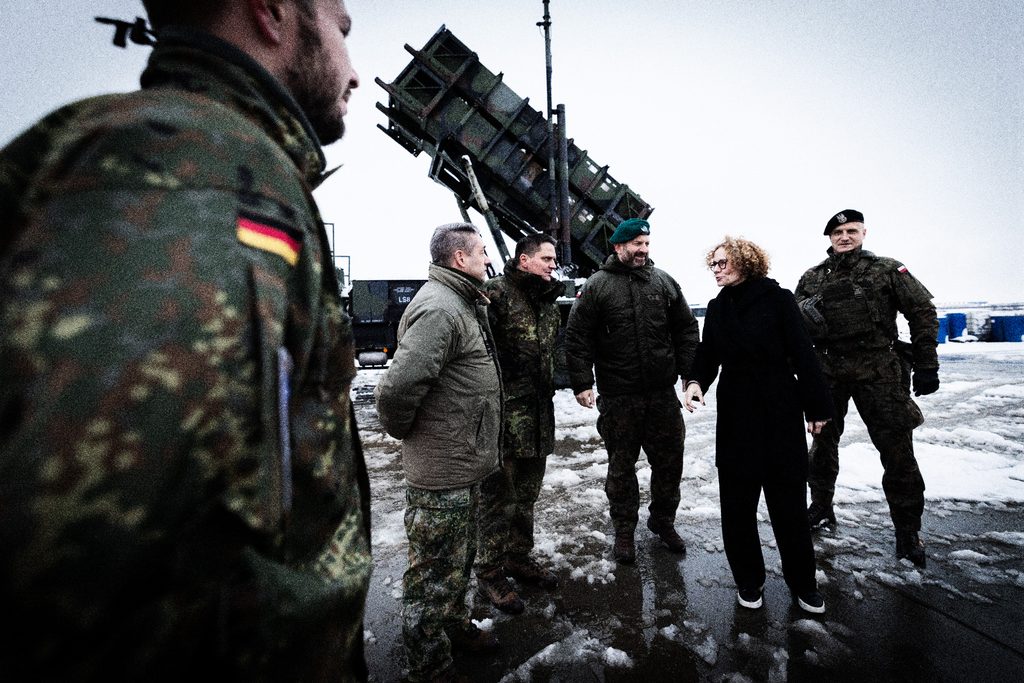
In recent months, without adequate internal or ally consultations, the Trump administration made a series of force posture decisions that included a reduction [13] in the brigades earmarked for Europe, from four to three, the cancellation of a deployment of a long-range fires battalion to Germany, plans [14] to pull out 5000 US troops from the country (coincidentally timed following Chancellor Friedrich Merz’s critical comments on the US war in Iran) and the halt [15] of a planned rotation of a US brigade to Poland.
Adding to the confusion, Trump subsequently announced that the United States would send an additional 5000 troops to Poland and has indicated that America is working toward a permanent army base in the country, but has not stated where these troops would come from.[16] The administration also informed allies that the United States would be reducing its contributions [17] to the NATO Force Model, the pool of allied forces available to NATO in a contingency or crisis. The reductions reportedly include fighter jets, reconnaissance aircraft, aerial refueling tanker jets, strategic bombers, an aircraft carrier strike group, and a missile-launching submarine that were previously assigned for Europe’s defenses.[18]
Moreover, it has been reported [19] that the ongoing posture review includes a political litmus test to determine whether European nations can be considered “model” allies by the administration. The review considers European nation support for US policies, including for its operations in Iran, as well as whether each nation supports regulations that constrain US business. One significant issue is that this practice denotes a politicized review that is not derived from military advice nor an evaluation of US resources and possible contingencies. Another concern is that the purported objective of this posture review is to reduce US posture in Europe at a time when the United States maintains between 60,000 to 80,000 personnel on the European continent (depending on exercises and rotational deployments), a mere 5 percent of its roughly 1.3 million active-duty servicemembers.[20] For such a limited footprint, the United States amasses tremendous benefits. US basing and logistics hubs across Europe allow the United States to project force globally and into other major theaters, a necessity of US global posture that would be far more difficult and costly if executed outside stable NATO structures.
In light of the threats posed by Russia as well as the benefits of a robust European presence to US global power projection, the United States should instead look to maintain current levels of US personnel assigned to NATO command post billets, as well as US participation in NATO exercises, training, and planning, which is critical to maintaining interoperability and readiness. Drawing down US forces and capabilities on a timeline that does not match new European procurement and fielding of their replacements will reduce America’s ability to manage escalation and weakens NATO deterrence against possible Russian aggression.

Conclusion
Overall, US policy toward NATO under the Trump administration has accurately diagnosed a key sustainability problem for the alliance and is driving allies to strengthen national spending and capability development. But to ensure a stronger NATO, there must be no question about US political or military commitment to the alliance. Otherwise, the United States risks creating a stronger Europe in a weaker NATO, which does not advance US security interests in the Euro-Atlantic or globally. A strong NATO will deter serious challenges the alliance faces from Russia, China, and other would-be aggressors. A weaker NATO diminished by the rapid withdrawal of American conventional forces and uncertain political commitment will only embolden Russia to test the boundaries of NATO deterrence. NATO 3.0 can work, but only if the United States remains committed—ensuring not only a stronger Europe, but also a stronger NATO anchored in American leadership.